In 1977, a new department called Delta Technical Services was formed by Delta Metals in Birmingham to continue the research. However, it remained difficult to justify the cost of the technology as computers were slow and expensive and the available software had few automatic features.
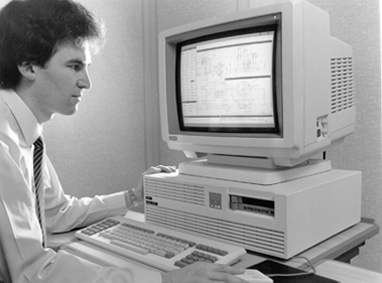
In 1982, mini computers with much more power at lower cost started to appear. This was a major step forward and, by 1984, the technology began to be competitive with traditional methods in many more applications. For many years, aircraft had been designed using computers but now it was becoming possible to economically design saucepans and other domestic products with complex 3D shapes using a computer.
When Donald Welbourn retired in 1983, DUCT development continued both at Cambridge and by the small team established at Delta in Birmingham. By 1984, the Birmingham team was larger than that at Cambridge and the unique features of DUCT began to be recognised. It was one of the very few systems developed from the beginning to design and machine products. Indeed, Donald Welbourn had arranged the first public display of combined CAD and CAM technology at the Machine Tool Exhibition held in Olympia, London, during June 1972. The equal emphasis on design and machining made DUCT different from its competitors and this was appreciated by the users. Most other systems had developed 2D drafting first, followed by 3D modelling with machining added later.
Since 1977, the demonstration activity in Birmingham had gradually been developed with additional machine tools being installed and a sub-contract programming service being added. This was now a separate commercial activity, Deltacam Systems Ltd, which by 1985 employed 15 people. This direct practical experience was very helpful in defining customers’ needs of the software and in testing new developments.